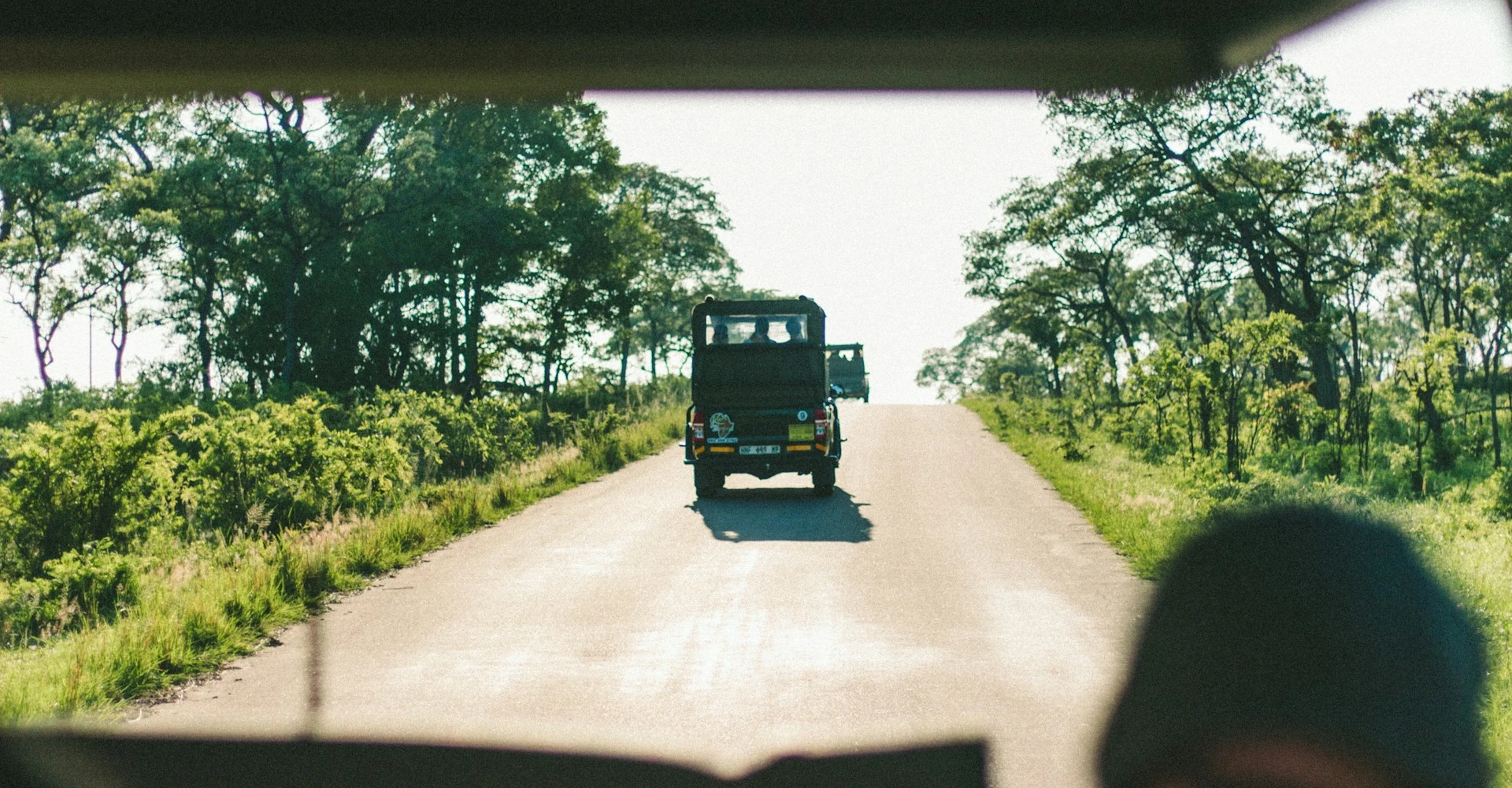
Self-Drive Kruger: The Anxiety Guide to Gate Times, Petrol Cards, and Elephant Right-of-Way
Maybe you've also wondered: Do Kruger petrol stations take cards? What if I need the bathroom and there's a lion nearby? What's the actual protocol when an elephant stands in the middle of the road and stares at my tiny Toyota?
Most Kruger guides spend 20 pages on the Big Five and one vague sentence on logistics. This one flips that ratio. Here is everything you need to know to explore Kruger on your own terms, without the background hum of anxiety.
Gate Times: The Non-Negotiable Rule
This is the rule that catches first-timers out. Kruger has strict gate and camp opening/closing times that change with the seasons. The park is fully fenced, and the gates are physical barriers. Miss them, and you're in genuine trouble.
The Golden Rule: You must be inside your booked rest camp gate by the closing time listed for that day. Not "almost there." Not "5 minutes away." Inside.
Consequences of Being Late:
- A fine (typically R500–R1500 per vehicle, but it can be higher).
- In extreme cases, you may be locked out and forced to find emergency accommodation outside the park at your own cost.
- You'll also get a stern, deeply disappointing look from the security guard. Honestly, this may be the worst part.
Where to Check Times:
The official SANParks website publishes a table of gate times for each month. Screenshot it before you enter. Cell signal is patchy at best inside the park.
Typical Pattern (approximate, always verify):
Gates generally open earlier and close later in summer when days are long. From December to January, expect opening around 04:30 and closing around 18:30. In February, gates open closer to 05:30 with the same 18:30 closing. March shortens slightly, closing at 18:00. From April through July, the rhythm shifts to a 06:00 opening and 17:30 closing. August and September keep the 06:00 start but extend to 18:00. October opens at 05:30 with an 18:00 close. November returns to the summer pattern of 04:30 to 18:30.
Camp gates (the internal fence around your rest camp) close at the same time. Once you're inside the camp for the night, you cannot drive out again until the next morning.
Pro Timing Tip: The golden hour for game viewing is the first 90 minutes after gates open and the last 90 minutes before they close. Plan your daily loop so you're near your camp during that final hour, not racing across the park against the clock.
Fuel & Payment: Don't Get Stranded
There is a special kind of dread that comes from watching your fuel gauge dip below a quarter while a herd of buffalo crosses the road ahead and your GPS has no signal.
Where Are the Petrol Stations?
Fuel is available inside Kruger, but only at the main rest camps. Not at picnic spots. Not at the smaller bushveld camps.
You can refuel at:
- South: Skukuza, Lower Sabie, Berg-en-Dal, Crocodile Bridge, Malelane Gate, Pretoriuskop
- Central: Satara, Orpen Gate, Phalaborwa Gate
- North: Mopani, Shingwedzi, Punda Maria, Pafuri Gate
The Payment Problem:
This is the critical detail. Many fuel pumps inside Kruger experience card machine failures. Network connectivity is unreliable, especially in the central and northern camps.
The Anxiety-Proof Strategy:
- Carry enough cash for a full tank of fuel. At least R800–R1000 in small notes.
- Do not rely solely on a credit or debit card.
- Fill up when you reach half a tank, not when the warning light comes on. The distances are deceptive, and a detour around a closed road can add 50 km to your day.
- If the card machine is down, they will ask for cash. Having it means you leave. Not having it means you wait—potentially for hours.
Elephant Right-of-Way: The Real Protocol
You will encounter elephants on the road. It's not a possibility; it's a certainty. How you handle this is the difference between a magical memory and a dangerous situation.
The Hierarchy of the Road (Unofficial but True):
- Elephants have absolute right-of-way. Always.
- Buffalo and rhino take priority.
- Everything else, including you, waits.
When an Elephant Blocks the Road:
- Stop. Put the car in neutral or park. Do not rev the engine.
- Keep a distance of at least 50 meters. If the elephant is close, do not reverse suddenly unless you have checked behind you.
- Read the body language. Elephants communicate clearly if you know the signs.
A relaxed elephant swings its trunk casually, with ears loose and flapping gently. That's calm curiosity, even indifference. Stay still and enjoy the moment. An annoyed elephant will shake its head and flap its ears aggressively. It's telling you to back off. Don't move forward; hold your position quietly. When the trunk curls inward, the elephant is uncertain or assessing the situation. Give it space and avoid sudden movements.
Then there's the moment every self-driver fears: the charge. A trumpeting elephant with ears spread wide, running toward you, is usually bluffing. It's terrifying, but most charges are false. Stay silent and do not flee. A real charge looks different: ears pinned back, completely silent, moving fast and directly at you. This is rare, but if it happens, reverse slowly if it's safe to do so. Never exit the vehicle under any circumstances.
The single non-negotiable rule: never, ever position yourself between a mother elephant and her calf. If a breeding herd crosses the road, stop well back and wait. Wait until the very last baby has crossed. A female elephant can flip a car if she perceives a threat to her calf. This happens.
The Unspoken Toilet Question
When nature calls, and you're an hour from the nearest rest camp, what do you do?
The Official Rule: You may only exit your vehicle at designated "get-out" points: rest camps, picnic spots, and certain hides. You cannot pull over on a quiet dirt road because you "really need to go."
The Unofficial Reality: Every self-driver has thought about this. The solution is to plan bathroom breaks around the picnic spots and camps.
Picnic spots with toilets (safe get-out points):
- South: Nkuhlu (between Skukuza and Lower Sabie), Afsaal (between Berg-en-Dal and Skukuza)
- Central: Timbavati (between Satara and Olifants)
- North: Babalala (near Punda Maria), Makhadzi (near Shingwedzi)
These are fenced areas where you can stretch your legs, use the bathroom, and—at some—buy snacks.
Rental Car Insurance: The Kruger-Specific Check
This is a pre-trip anxiety worth resolving at the counter.
What to confirm before you leave the rental office:
Does the insurance cover gravel roads inside a national park? Most do, but some budget policies exclude them. Kruger's dirt roads are well-maintained, but ask.
Does the policy cover animal damage? Hitting an antelope is not unheard of. A monkey stealing your windshield wipers is a real possibility. Know what you're liable for.
Spare tyre condition. Check it yourself. A flat on a dirt road with no cell signal is inconvenient; a flat with a deflated spare is a crisis.
What to Pack for Peace of Mind
A small kit in the glove compartment that solves most quiet fears:
- Cash (R1000+ in varied notes): For fuel, gate entry, and picnic spot food.
- A paper map of Kruger: Phones fail. GPS fails. A physical SANParks map is foolproof.
- A power bank: The cigarette lighter charger is unreliable in some rental cars.
- Snacks and water: Enough for half a day stuck waiting for a herd to move.
- Torch/Headlamp: For finding your bungalow in camp after dark.
The Anxiety-Free Self-Drive
Self-driving Kruger is not complicated. It's just that most guidebooks assume you already know the unwritten rules and quiet logistics. Now you do.
The gates have a schedule. The elephants have a language. The petrol stations have unreliable card machines. Once you account for these three truths, you're free to focus on what you came for: the leopard in the tree, the sunset over the Sabie River, the sound of a lion roaring somewhere in the dark while you're safe inside your camp, exactly on time.
Ready to Plan Your Kruger Safari?
This article covers the logistics, but logistics alone don't make a safari. Which rest camp should you book? What's the best route for a 3-day vs. 7-day self-drive? Where are the lesser-known picnic spots and hides that most visitors skip?
Explore the Full Kruger National Park Guide — https://naturaoasis.com/en/travel-guides/kruger
Our Kruger National Park Travel Guide includes detailed rest camp comparisons, recommended daily routes, and a map with every petrol stop, picnic spot, and hide marked for offline use. Written for self-drivers, by someone who has made the mistakes so you don't have to.
Don't just survive the bush. Own it.