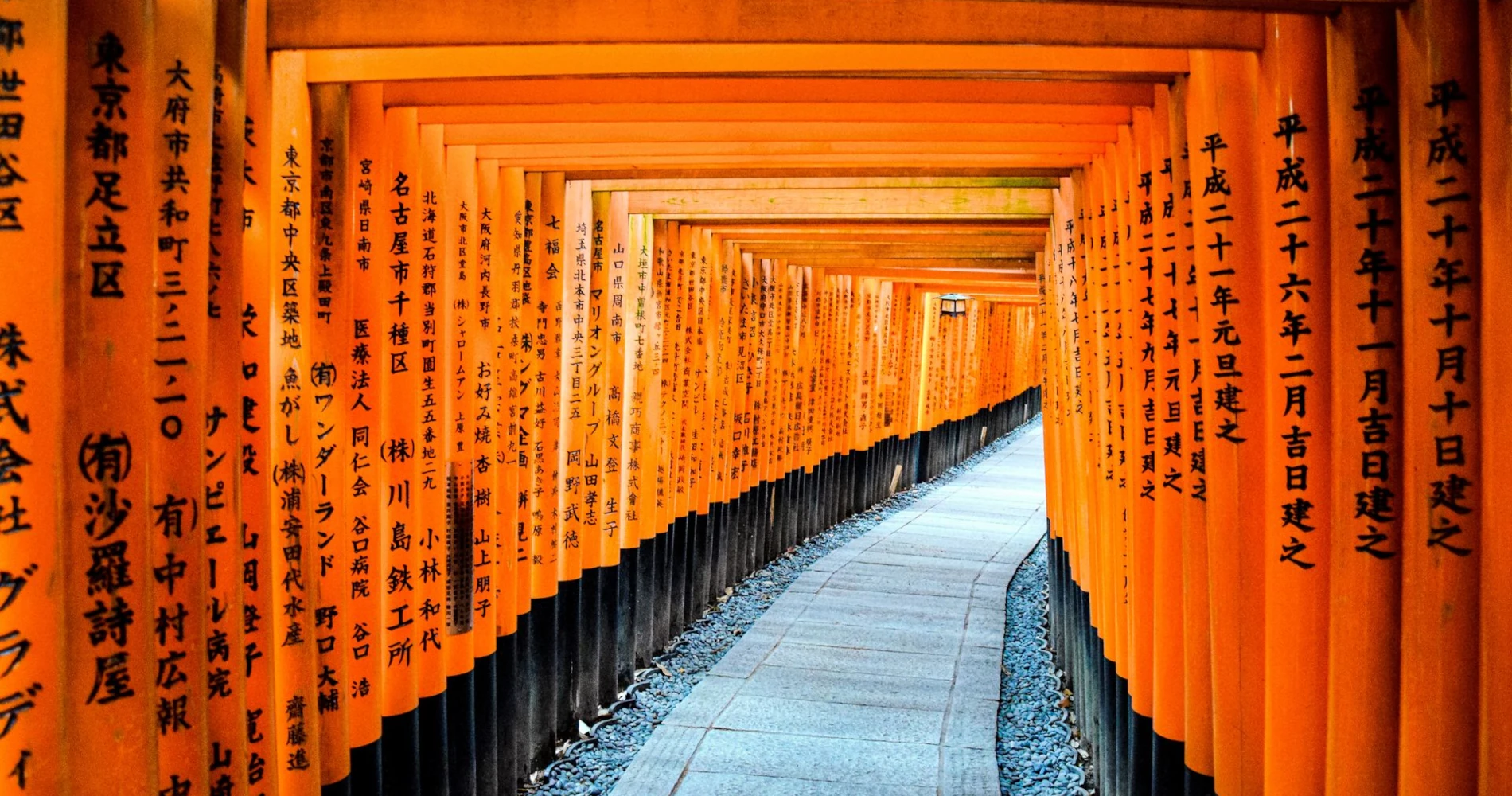
Kyoto's 7 AM Club: Why Fushimi Inari Is Pointless After 8:30 AM
This is not an exaggeration. Fushimi Inari Taisha is the most visited site in Kyoto, and its famous lower torii tunnel is barely two hundred meters long. By ten in the morning, that stretch has several hundred people in it, moving at the speed of the slowest phone camera in the group ahead of you. By midday, it is a shuffling queue. The photograph you came for is impossible.
But here is the part most guides don't tell you: Fushimi Inari is open 24 hours a day. It is free. It has no gate, no ticket, and no closing time. That combination is rarer in Kyoto than it sounds, and it is precisely what makes this the one major site where you can genuinely control your experience—if you're willing to set an alarm.
This is the 7 AM Club. Here is how to join it, and why it changes everything.
The Crowd Timeline: What Actually Happens, Hour by Hour
Understanding the rhythm of Fushimi Inari is the difference between a magical morning and a frustrating shuffle.
- Before 6:30 AM: The Senbon Torii is not just quiet. It is empty. The first JR train from Kyoto Station departs around 5:30 AM, and if you're on it, you'll be walking under the first torii before 5:40. In winter, it's still dark at this hour, and you'll want a phone torch. In summer, the light is just beginning to filter through the gates. Either way, the tunnel belongs to you and perhaps a handful of early-rising locals making their morning prayers.
- 6:30 AM to 8:00 AM: This is the sweet spot. The light is soft and photogenic. The crowds are thin enough that you can wait ten seconds for a clean frame instead of ten minutes. Tour groups have not yet arrived in force. This window—roughly 6:30 to 7:30—is consistently identified as the prime photo time by visitors who have done it. By 7:30, you'll start seeing the first tour groups on their way up as you're on your way down.
- 8:30 AM to 10:00 AM: The shift is noticeable. The lower gates begin to clog. The one-way traffic system near the entrance, designed to manage the volume, kicks in. You can still move, but you're moving with a crowd, not through a space.
- 10:00 AM to 4:00 PM: This is the window to avoid entirely if you care about atmosphere, photography, or simply experiencing the shrine as a place of worship rather than a conveyor belt. The lower gates are a "shuffling queue," and the noise level rises accordingly.
- After 5:00 PM: The evening has its own appeal. The gates take on an amber glow under fading light, and the atmosphere becomes moody and quiet again. But for the classic soft-light photograph, morning remains superior.
The 7 AM Route: A Step-by-Step Plan
Arriving early is only half the battle. Where you go in those first ninety minutes determines what you actually experience.
- 6:00 AM — The Romon Gate. Exit Inari Station (JR Nara Line, two stops from Kyoto Station, about five minutes, roughly ¥150) and you are immediately at the shrine's main entrance. The blazing vermilion Romon Gate is your first frame. There will be almost no one here.
- 6:15 AM — Enter the Senbon Torii. Walk through the main hall area and straight into the tunnel. Ignore the instinct to linger at the very first gates. Keep moving. The density of people drops the further you ascend, and the light gets better.
- 6:45 AM — The Yotsutsuji Intersection. This is the halfway rest point, roughly 30 to 45 minutes up, with a sweeping panorama over Kyoto. It is also the point where the crowd dynamics shift dramatically. Roughly 90% of visitors turn back at or before this junction. If you stop here, you've seen the famous tunnel but missed the mountain. If you continue, you enter a different Fushimi Inari entirely.
- 7:30 AM — Turn Back (If You Want the Classic Photo). If your goal is the tunnel photograph, this is when you should begin your descent. The light is still good, and you'll be walking against the incoming tide rather than with it. You can be back in central Kyoto by 8:00 AM, with the entire day still ahead of you.
If You're Continuing to the Summit: The full loop to the top of Mount Inari (233 meters) and back is about four kilometers and takes most people two to three hours at a relaxed pace, including stops. Above Yotsutsuji, you will pass perhaps a handful of people in an hour. The gates continue, the forest deepens, and the silence returns. This is the version of Fushimi Inari that the 8:30 AM crowd will never see.
The Reverse Route Trick (And Why It Only Works Early)
There is a small, well-known trick among repeat visitors: at the entrance to the Senbon Torii, most people follow the "keep right" instruction. If you turn left instead and walk the reverse route, you immediately leave behind a significant portion of the crowd—sometimes over 30% of it.
Here's the catch: this trick only works before the crowds arrive. By 9:00 AM, the reverse route is just as congested as the forward one, and the one-way system near the entrance may be enforced in a way that limits your options. The reverse route is an early-morning tool, not a midday hack.
What to Bring at 7 AM (And What to Leave Behind)
The early start comes with its own small logistics.
Bring:
- Comfortable shoes. Even the lower route involves stairs and uneven stone paths. If you're going to the summit, you're looking at a proper hike.
- A small torch or phone light in winter, when 6 AM is still pitch dark.
- Cash for a drink or a small offering. The shrine is free, but the vending machines and small stalls may open later.
- A light layer. The mountain is cooler than the city, especially before sunrise.
Leave behind:
- The kimono rental. It photographs beautifully at the shrine, but hiking a mountain in one is a commitment you may regret by the third flight of stairs.
- The expectation of a leisurely breakfast nearby. Most cafes around Inari Station don't open until 8:00 or later. Plan to eat back in central Kyoto.
Why "Pointless After 8:30" Is Not an Exaggeration
Let's be precise about the claim in the title, because it matters.
Fushimi Inari is not literally pointless after 8:30 AM. It is a functioning Shinto shrine, free and open to all, and a place of genuine spiritual significance. You can visit at noon and still have a meaningful experience.
But if you are visiting for the reason most first-time travelers visit—to walk through the torii gates with a sense of wonder rather than a sense of being herded—then the version of Fushimi Inari you came for ceases to exist once the tour groups arrive. The photograph becomes impossible. The silence disappears. The tunnel becomes a corridor.
The 7 AM Club is not about being smug or superior. It is about understanding that some places have a version of themselves that only exists at certain hours. Fushimi Inari's best version exists between roughly 6:00 and 7:30 AM. That window is not a secret, but it is a choice. Most people will not make it. You can.
The Rest of Your Kyoto Morning
One of the underrated advantages of the 7 AM start is what it gives you back. You'll be descending as the crowds ascend. You'll be back at Kyoto Station or in Gion by 8:00 or 8:30, with an entire day of exploration ahead of you—while everyone else is still queuing at the first torii gate.
Use that gift wisely. Kyoto's other major sites have their own crowd rhythms, and understanding them is the difference between a checklist tour and a genuinely memorable trip. Which temples are worth the early alarm? Where should you go when Fushimi Inari is already full? And how do you string these early mornings together without burning out by day three?
Want the Full Kyoto Crowd Clock?
This article gives you Fushimi Inari. Our guide gives you the whole city.
Explore the Full Kyoto Guide — https://naturaoasis.com/en/travel-guides/kyoto
Our Kyoto Travel Guide includes practical transport advice, neighborhood breakdowns, and food recommendations for every hour of the day, from 6 AM temple visits to late-night ramen.
Set the alarm. Earn the silence.